
 Dr Ashu Kumar Jain
Many patients with lower back pain assume the problem is always in the spine. Sometimes it is. But in some cases, the pain comes from a small but important joint where the lower spine meets the pelvis. This is called the sacroiliac joint, or SI joint. When this joint becomes painful, it can feel very similar to back pain, hip pain, or even sciatica.
Why the Sacroiliac Joint Is Often Missed
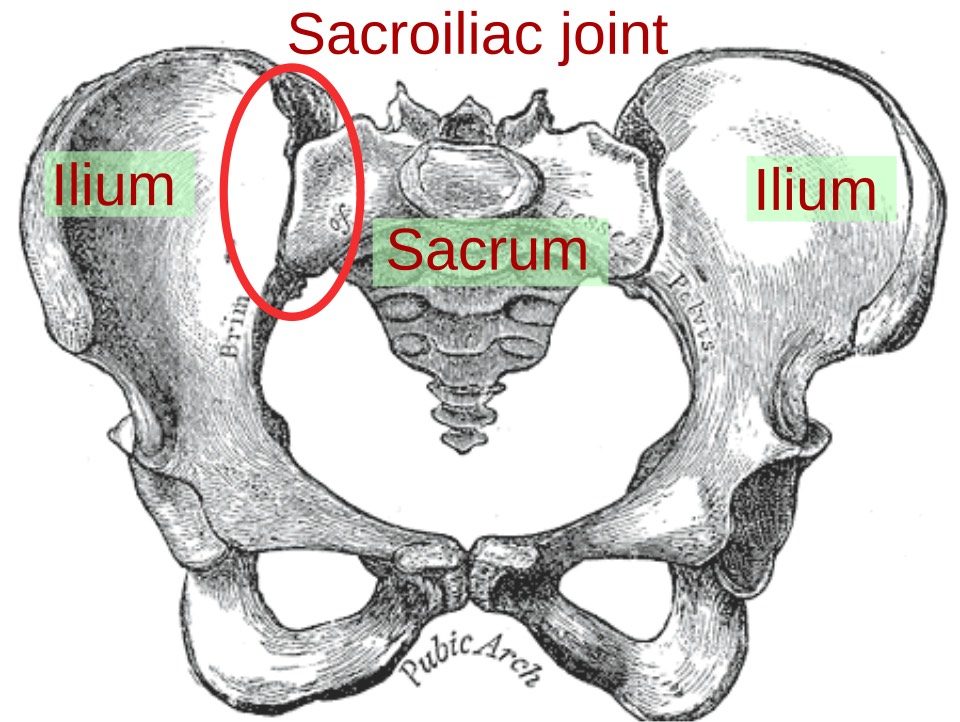
The sacroiliac joint sits deep at the back of the pelvis. There is one SI joint on each side, connecting the sacrum at the bottom of the spine to the ilium of the pelvis.
Because of its location, SI joint pain does not always feel like pelvic pain. It may feel like lower back pain, buttock pain, hip pain, or pain going toward the thigh.
This overlap is the reason many patients spend months treating the lower back, while the real pain source is lower down near the pelvis.
What Does SI Joint Pain Feel Like?
SI joint pain is often felt on one side of the lower back or buttock. Some patients feel it close to the dimple area at the back of the pelvis. Others feel pain around the hip, groin, or upper thigh.
The pain may increase while standing for long periods, climbing stairs, turning in bed, getting up from a chair, or walking on uneven ground.
It can also feel worse after a fall, injury, pregnancy-related pelvic strain, or previous spine surgery. The exact pattern is different for every patient, which is why a careful examination matters.
Why It Can Look Like Disc Pain or Sciatica
Disc pain and sciatica are common causes of lower back and leg pain, so they are often suspected first. But SI joint pain can overlap with both.
A patient may feel pain in the lower back, buttock, or back of the thigh and assume it is a nerve problem. Sometimes MRI findings may also show disc changes, but those changes may not be the main pain source.
This is why treatment should not be based only on a scan report. The doctor has to match the scan with the pain pattern, physical examination, and response to treatment.
How Does a Doctor Suspect SI Joint Pain?
A pain specialist looks for clues in the history and examination. The location of pain, the movements that trigger it, and the way the pain behaves during daily activities all matter.
The doctor may perform specific physical tests that gently stress the sacroiliac joint. If these tests reproduce the familiar pain, the SI joint becomes a stronger suspect.
Still, diagnosis can be difficult. Imaging may help rule out other problems, but it does not always prove that the SI joint is the active pain source.
What Is a Sacroiliac Joint Injection?
A sacroiliac joint injection is a targeted procedure where medicine is placed into or around the SI joint. It usually contains a local anaesthetic and a steroid.
The local anaesthetic can give short-term relief and help confirm whether the SI joint is generating the pain. The steroid can reduce inflammation and provide longer relief in selected patients.
The injection is performed under image guidance, such as fluoroscopy or ultrasound, so the medicine reaches the correct area. This accuracy is important because the SI joint is deep and narrow.
"A sacroiliac joint injection is not just about pain relief. It can also help confirm whether the pelvis is the real source of pain."
How Can One Injection Diagnose and Treat?
The diagnostic part is simple. If the pain reduces clearly after the injection, it supports the SI joint as the pain source.
The treatment part depends on the cause of pain. If inflammation is playing a role, the steroid may reduce irritation and help the patient move better.
This relief can also make physiotherapy and strengthening easier. In many patients, the injection is one step in a larger plan, not the only treatment.
Who May Benefit From SI Joint Injection?
This injection may be considered when the pain pattern and examination suggest SI joint involvement, especially when regular treatment for lower back pain has not helped enough.
It may also be useful in patients with one-sided lower back or buttock pain, pain after spine surgery, pain after trauma, or pain that increases with standing, stairs, or turning in bed.
Not every patient with back pain needs this injection. The decision should come after proper evaluation by a pain specialist.
What Happens After the Injection?
After the injection, the doctor may ask you to track your pain relief. This is important because the response helps confirm whether the SI joint was truly involved.
Some patients feel relief quickly because of the local anaesthetic. Steroid-related relief may take longer. Mild soreness at the injection site can happen for a short time.
Your doctor may also advise activity changes, exercises, physiotherapy, or follow-up treatment depending on your response.
The Takeaway
Not all lower back pain comes from the disc or spine. Sometimes the sacroiliac joint is the missing source.
If pain is felt low in the back, near the buttock or pelvis, and it has not improved with routine care, SI joint pain should be considered.
At Jain Pain Clinic, Dr Ashu Kumar Jain evaluates the full pain pattern before recommending treatment. The goal is to identify the true source of pain and choose the least invasive option that makes sense.